
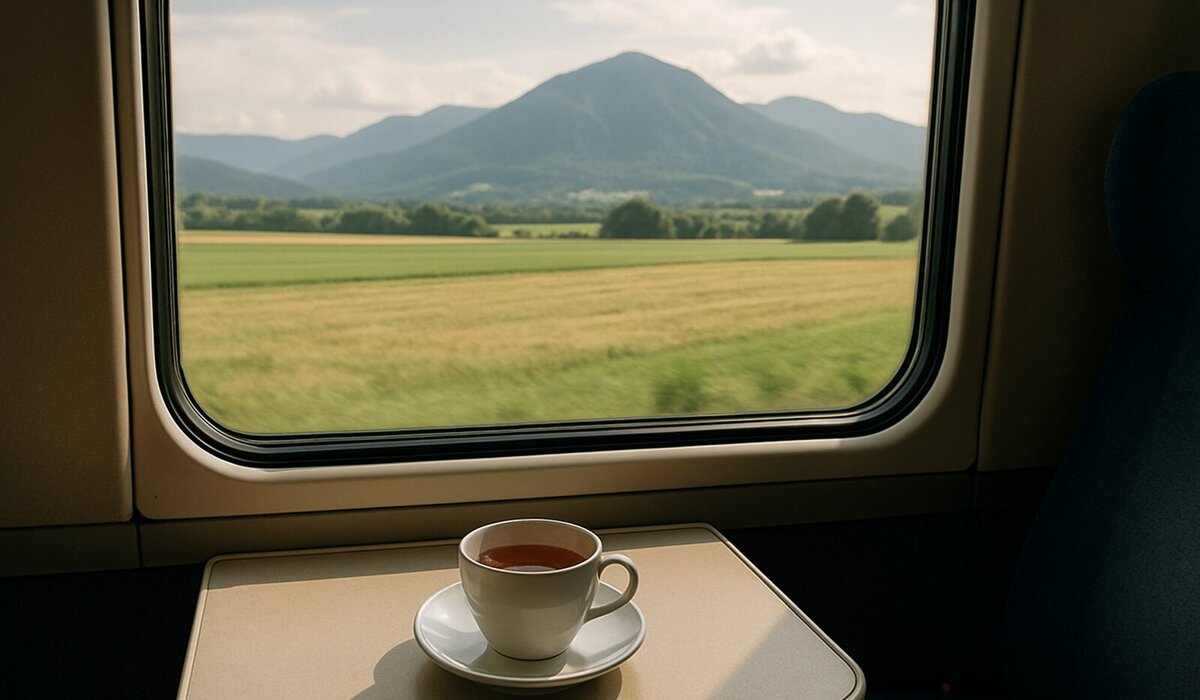
There is a particular quality to a train journey that no other form of long-distance travel quite replicates. The landscape scrolls past at a speed that allows genuine observation — forests, valleys, villages, and river plains passing in sequence rather than being skipped entirely at altitude. For travellers drawn to this pace, slow travel by rail has become a considered approach to trip planning in its own right, rather than simply a transit method.
What 'Slow Travel by Train' Generally Means
The phrase refers less to the speed of the trains themselves and more to the philosophy of the itinerary. A slow-travel rail journey typically involves choosing a series of stops along a corridor or circuit, spending at least one or two nights in each location rather than arriving and departing on the same day. The goal is to move through a region in a way that allows some genuine engagement with each place — walking the streets, visiting a market, or simply sitting in a town square long enough to notice how it works.
This contrasts with a point-to-point itinerary that treats each city as a single day-trip destination before moving on. Slow rail travel tends to favour depth over breadth, and travellers who organise trips this way often report that they feel less rushed and retain clearer memories of individual places.
How Travellers Research and Map a Rail Route
Planning begins with understanding which rail corridors connect the towns or regions under consideration. National and regional rail network maps — available through official operator websites, which should always be checked directly as schedules and services change — give a picture of which lines run where and how frequently. Many travellers use these maps alongside paper atlases to identify smaller towns that sit on a line but rarely appear in standard travel guides.
A common approach involves identifying one or two larger hub cities that anchor the journey at either end, then selecting three or four intermediate stops based on what each place offers: a medieval old town, a weekly food market, a trailhead for a day hike, or a landscape worth spending an afternoon in. The rail timetable then dictates how the stops connect.
What the Journey Itself Involves
On longer international or regional rail routes, many travellers choose overnight services when available, arriving in a new city in the morning with the day ahead of them. Daytime services on scenic corridors — mountain passes, lake shores, or river valleys — are often chosen specifically for the views rather than purely for efficiency.
Seat reservations are sometimes required on certain express or cross-border services even when a multi-journey pass is held; this varies by network and route, and conditions should be confirmed with the relevant rail authority before departure. Travellers new to this style of journey often keep a small notebook or use a travel journal to record connections, platform numbers, and observations — a habit that also helps when plans need adjusting at short notice.
Choosing Where to Stop: Matching Towns to the Itinerary
One of the appealing aspects of rail travel is that small towns served by regional lines are often overlooked by travellers who move exclusively by air. Mountain towns, historic market settlements, and quietly scenic riverside villages frequently appear on regional rail maps that see modest tourist traffic, which can mean a more settled atmosphere for those who do stop.
- Heritage and culture: Old towns with intact medieval or industrial-era architecture are often positioned along historic rail corridors built for the same economic reasons that made those towns significant.
- Natural access: Many hiking trail networks begin within walking distance of small train stations, making rail a practical approach for walkers who prefer not to drive.
- Food and markets: Weekly markets in smaller rail-served towns tend to cater primarily to local residents, offering a different character from those in major tourist hubs.
Keeping the Itinerary Flexible
Experienced slow-travel rail planners typically build in at least one open day per week — a day with no confirmed onward reservation — to allow for extension if a town warrants another morning, or to absorb delays without stress. Timetable disruptions, engineering works, and seasonal service changes are common on regional networks, and official sources should be consulted regularly. Entry conditions, local opening hours, and transport connections all change and are best verified directly with relevant authorities closer to the time of travel.
The appeal of this style of journey is, in many ways, inseparable from its pace. Slow travel by train is an approach that treats the time between destinations as part of the experience rather than a delay to be minimised.